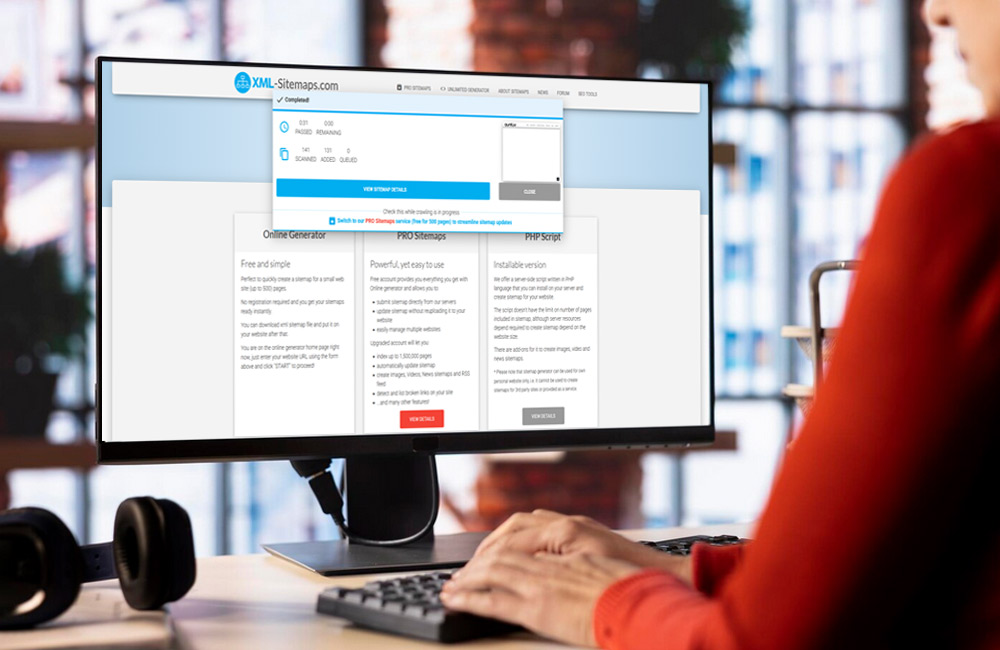
A good sitemap and a clean URL structure are like the foundation of a house—they hold everything together and ensure that search engines and users can keep track of everything. But what exactly is behind this, and how do you implement it correctly? A clear structure helps Google understand your content faster and ensures that no page “gets lost.” At the same time, users navigate more intuitively and stay on your website longer—an important factor for your SEO ranking.
What is a sitemap?
A sitemap is basically a map of your website. It lists all the important pages and shows search engines how your content is interconnected. There are two main types:
- XML sitemap: designed for search engines, helps with crawling and indexing.
- HTML sitemap: designed for users, improves navigation on your site.
An XML sitemap is especially important if you have many subpages, product pages, or blog posts. It makes it easier for Google to crawl even deeply nested content. An HTML sitemap, on the other hand, offers real added value for users: It shows them at a glance everything there is to discover. The more transparent your structure, the more trustworthy your website appears—both to visitors and to search engines.
Why is the sitemap important for SEO?
Google uses sitemaps to efficiently find and evaluate your pages. It’s especially essential for large websites or new projects without many backlinks. A well-maintained sitemap signals structure, quality, and timeliness. It shows Google which pages are important, how often they’re updated, and how their content is related.
Without a sitemap, individual pages may not appear in search results at all. An up-to-date sitemap is therefore a direct communication channel between your website and Google. If you maintain it properly, you’ll improve your crawl budget and ensure that important content is indexed faster.
The ideal URL structure
Clear and logical URLs help not only search engines but also your visitors. A good URL structure acts as a guide through your website. Here are a few basic rules:
- Use descriptive URLs—that is, words instead of numbers or codes.
- Separate words with hyphens (e.g.,
/webdesign-tipps/instead of/webdesigntipps/). - Keep URLs short and concise.
- Use topical hierarchies (e.g.,
/blog/seo/sitemap/).
A clear URL structure directly impacts the click-through rate (CTR) in search results. Users often decide whether to click on a page based on the URL. Avoid special characters, uppercase letters, or unnecessary parameters. A consistent, readable structure conveys professionalism and strengthens your brand identity.
Avoid common mistakes
Many websites lose ranking points due to minor oversights. Make sure you don’t have any duplicate URLs, set up redirects properly, and remove or redirect old pages. A consistent structure helps Google understand your content correctly.
Common mistakes include orphaned pages, incorrect canonical tags, or inconsistent parameters (e.g., with and without “www”). Check your URLs regularly with tools such as Screaming Frog SEO Spider or Sitebulb, to identify technical issues early on. Technical cleanliness is the invisible foundation of every SEO success.
How to Create Your Sitemap
If you use a CMS like WordPress, you can automatically generate a sitemap using plugins such as Yoast SEO or Rank Math. Alternatively, there are online generators such as xml-sitemaps.com. Then upload the sitemap to Google Search Console—this way, Google knows exactly what to index.
It’s worth updating your sitemap regularly, especially after major changes to your website’s structure. You can also combine different sitemaps—for example, one for products, one for blog posts, and one for media content. This helps you maintain control and a clear overview. The better you organize your sitemap, the more clearly you communicate with search engines.
Conclusion
A well-thought-out sitemap and a clean URL structure are simple yet powerful SEO tools. They improve crawling, the user experience, and ultimately your ranking. Those who take care with these elements lay the foundation for long-term success. It’s worth investing time in the technical foundation—because only what can be found can truly convince visitors.
Further Resources:
You can find a complete list of the known 200 Google ranking factors here:
https://backlinko.com/google-ranking-factors
Image: freepik.com