A successful website doesn’t happen by chance—it’s the result of a structured process. With a clear roadmap, you’ll save time, money, and stress. This 5-step plan shows you how to turn an idea into a live, high-performing, and search engine-friendly website. The guide is aimed at entrepreneurs, project managers, and anyone who wants to build a professional online presence. A systematic approach ensures that design, functionality, and visibility are optimally aligned.
Step 1 – Goal & Concept: What is the website for?
Before you design or develop anything, clarify the goal of your website. Typical goals include generating leads, selling products, building brand awareness, or providing information. A brief overview of the target audience, core messages, and desired actions (CTAs) serves as a compass for all subsequent steps. Technical constraints such as GDPR requirements, multilingual support, or e-commerce features should also be defined early on. The clearer the goal, the more precisely the design, content, and technical implementation can be tailored.
- Generate leads (contact requests)
- Sell products (e-commerce)
- Build brand awareness
- Provide information (blog, guides)
Step 2 – Information Architecture & Content Plan
Organize your content in a logical and structured way. Which pages do you need, and how are they connected? A clear sitemap ensures that visitors quickly find what they’re looking for. Content hierarchies such as pillar pages, categories, and page types make SEO efforts and internal linking easier later on. Also, plan who will deliver which content and by when—this prevents bottlenecks and keeps the project on track. Well-prepared content enhances the user experience and visibility in search engines.
- Create a sitemap (flat hierarchy, important pages ≤ 3 clicks from the homepage)
- Define keywords for each page (important for SEO later on)
- Plan content: text, images, videos, FAQs—who provides what and by when?
Step 3 – Design & Prototyping
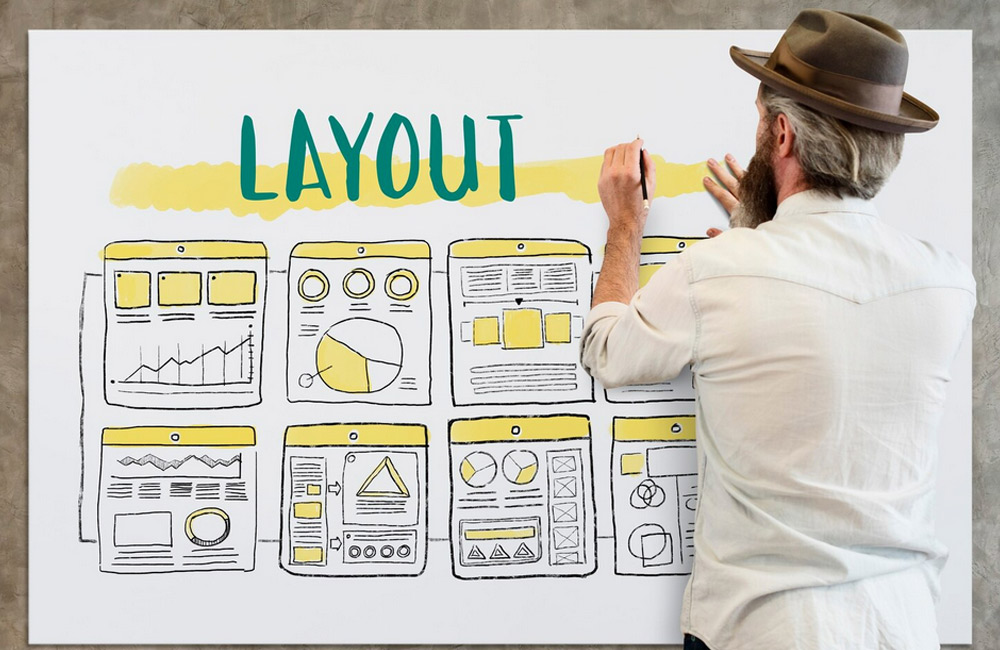
The design phase creates the visual and functional framework of your website. Wireframes and clickable prototypes help test usability and user flow early on. A “mobile-first” approach ensures the site works on all devices. A consistent design kit for colors, typography, buttons, and visual language creates brand recognition. Interactive prototypes enable feedback from stakeholders and early adjustments. Accessibility (WCAG) and SEO basics such as H1 tags, meta tags, visible CTAs, and trust signals should be considered from the very beginning.
- Wireframes for desktop and mobile
- Design kit: colors, typography, buttons, visual language, icons
- Interactive prototypes (e.g., Figma) for usability testing
- Integrate accessibility, SEO basics, and conversion elements
Step 4 – Development & Technical Implementation
Now the design is translated into clean code. Choose the right technology—CMS, headless solutions, frameworks, or static site generators. Technical SEO, performance, and security are crucial. Descriptive URLs, XML sitemaps, Schema.org data, and HTTPS ensure good indexing and build user trust. Image optimization, caching, and CDNs boost loading speed. Tracking, consent managers, and data protection must be implemented correctly. Properly programmed redirects (301) and regular updates ensure long-term stability.
- Choose a CMS, framework, or static generator
- Technical SEO: descriptive URLs, XML sitemap, Schema.org, robots.txt
- Performance & Security: HTTPS, WebP, caching, CDN, 301 redirects
- Implement tracking & data protection
Step 5 – Testing, Launch & Continuous Optimization
Testing before going live is mandatory. Check functionality, cross-browser compatibility, responsiveness, load times, and accessibility. A soft launch or staging environment allows for feedback from stakeholders. After the launch, the real work begins: measuring, learning, and improving. Use analytics tools, A/B testing, and regular content updates to continuously improve performance and user experience. This ensures your website remains up-to-date and successful in the long term.
- Pre-launch testing: functionality, forms, cross-browser compatibility, responsiveness, load times, accessibility
- Check soft launch/staging, stakeholder review
- Go-live: DNS, HTTPS, Search Console, submit sitemap
- Continuous optimization: monitor user behavior, A/B testing, maintain content and technology
Bonus: Timeline & Roles
A clear timeline and defined roles simplify project management. Small projects can be completed in 4–8 weeks; larger projects require 3–6 months. Each role has clear responsibilities, from the project manager to the tester. This ensures that all tasks are completed on time and the website goes live successfully. Regular status updates keep everyone involved informed.
- Project Manager / Client – Goals & Approvals
- UX/UI Designer – Wireframes & Prototypes
- Content Creator – Text & Media
- Developer – Front-end/Back-end Implementation
- QA / Tester – Pre-launch Testing
Checklist: Quick Overview
- Goals & KPIs Defined
- Sitemap & Content Plan Created
- Prototypes and Design Approved
- Technical SEO & Data Protection Implemented
- Tests Conducted and Launch Planned
- Monitoring & Optimization Plan Activated
Conclusion
With a structured 5-step plan, you stay in control of your web project. From the initial idea to launch and beyond, you can ensure that design, content, and technology work together seamlessly. At Aurelix, I provide end-to-end project support—from concept and design through technical implementation to continuous optimization. This turns your website into a powerful marketing tool that wins over visitors and delivers results.
Image: freepik.com