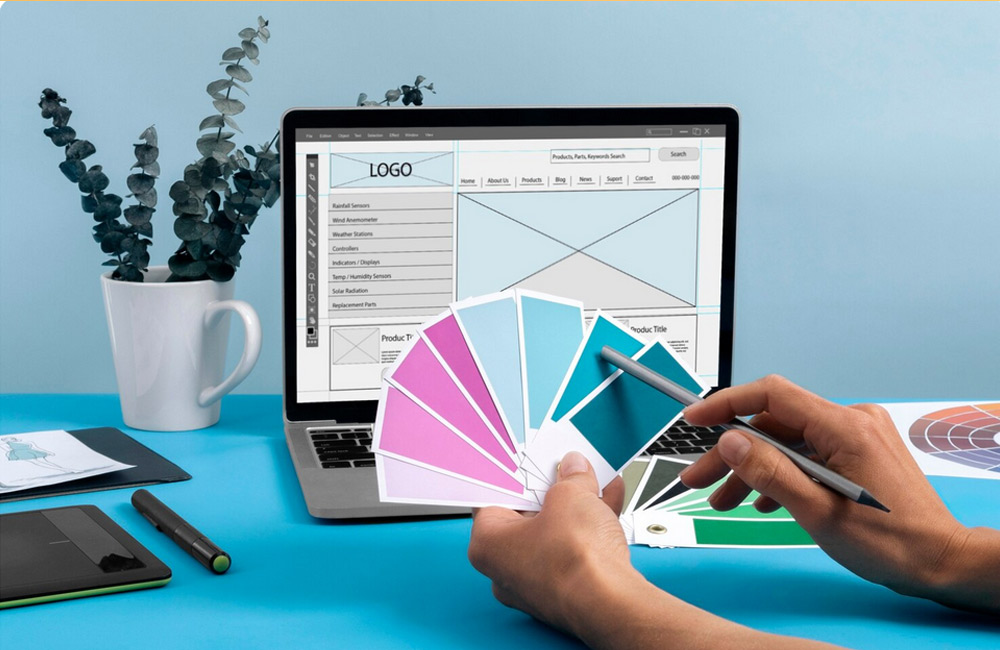
Web design is much more than just aesthetics—it directly influences how visitors feel, act, and make decisions. Every color, every icon, and every button has an effect on a subtle, psychological level. Good design guides the eye, builds trust, and strengthens brand loyalty. For web design to be fully effective, it requires a clear structure and purposeful design that combines emotion and logic.
1. The Impact of Colors
Colors speak the language of emotions. They subconsciously evoke feelings, influence moods, and convey brand values. Blue stands for trust, security, and reliability, red for energy, passion, and a call to action, green for calm, nature, and health, and orange for joy of life and activity. A well-thought-out color concept is no accident, but rather the result of psychological impact and a deliberate brand strategy. Less is often more: Too many colors can be confusing, while a harmonious palette guides the eye and provides clarity.
You can find further inspiration, for example, in the article Color Theory in UX Design.
2. Buttons and Calls to Action
Buttons are the bridge between interest and action. Their shape, color, and position influence whether someone clicks or keeps scrolling. An eye-catching, high-contrast call-to-action button draws the eye and provides guidance. Text such as "Discover Now" or "Try for Free" speaks directly to the subconscious and encourages decision-making. Make sure buttons always appear consistent—the same shapes, colors, and spacing create recognition.
You can find more on the topic of conversion optimization at Optimizely – Call to Action.
3. Layout and Visual Hierarchy
A good layout tells a story—clear, intuitive, and structured. The user’s gaze follows patterns, such as the so-called "F-pattern," where important information begins in the top-left corner. Headings, paragraphs, and white space provide orientation, while strategic visual guidance directs the user’s attention to the most important content. Core messages and calls to action should be immediately visible "above the fold"—without scrolling.
A clear structure builds trust, reduces bounce rates, and makes content appear more professional. If you want to dive deeper, you’ll find Nielsen Norman Group offers further tips on visual hierarchy.
4. Consistency and Recognition
Consistency builds trust. When colors, fonts, and spacing appear the same everywhere, visitors perceive your brand as reliable. An inconsistent design, on the other hand, can subconsciously trigger confusion or mistrust. Recognition is a key success factor—it connects users emotionally with a brand. Make sure your branding remains consistent across different platforms (website, social media, newsletter).
You can find inspiration in this post: How Consistency Strengthens Brands.
5. The Interplay of Psychology
Successful web design is a harmonious interplay of psychology, structure, and emotion. Colors draw attention, buttons prompt action, and layouts guide the eye. The more naturally the user is guided through your site, the higher the conversion rate. A well-thought-out design appeals to both the subconscious and the conscious mind—and transforms random clicks into conscious decisions.
Conclusion
Colors, buttons, and layout are the invisible architects of a website. Those who use them thoughtfully and strategically build trust, evoke emotion, and drive action. A harmonious design isn’t loud, but clear—it guides, inspires, and strengthens brand awareness. Professional web design is a balance of psychology, aesthetics, and technology—and that’s exactly what determines whether visitors stay or leave.
Image: freepik.com